West Hollywood
One point nine square miles that still has a working city government, because it built one once already.
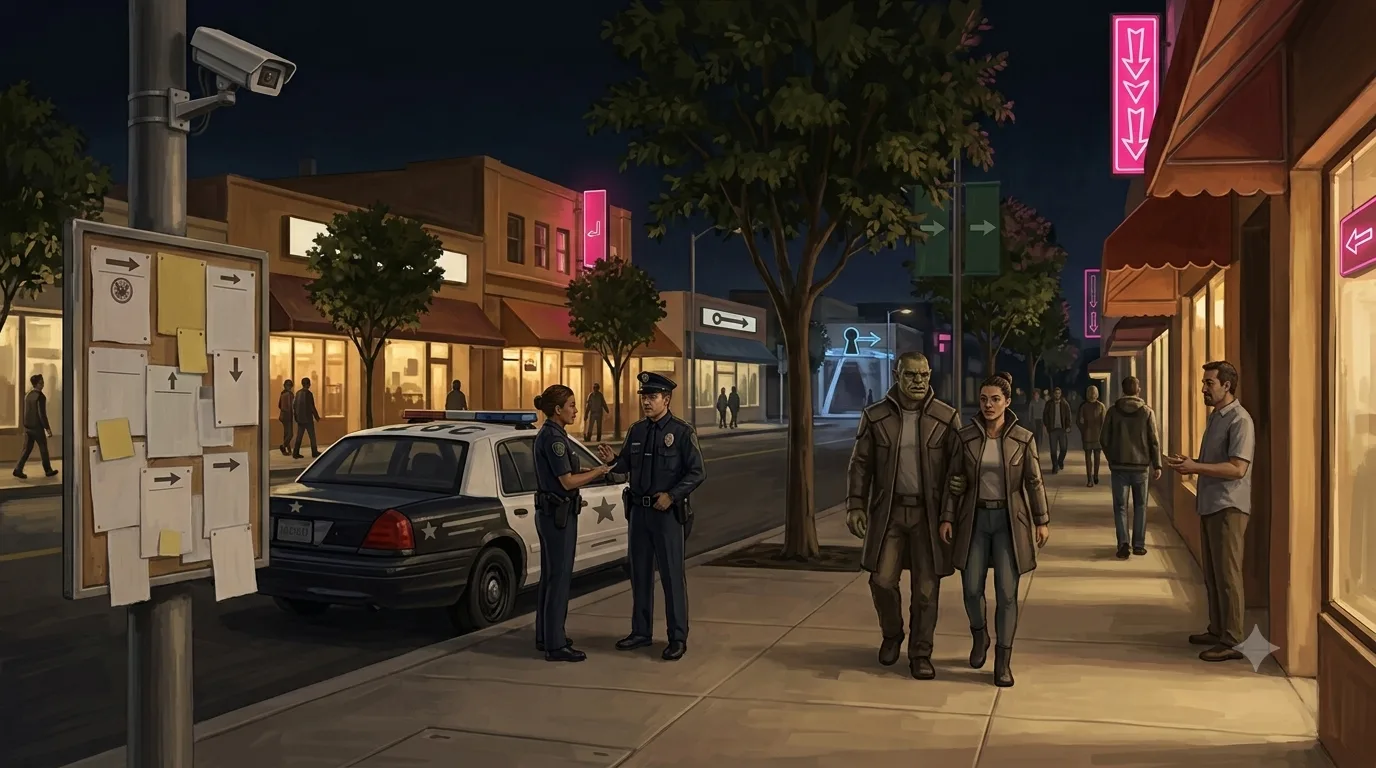
The smallest district in Los Angeles and the only one that answers the question "who's in charge here" with a name and an office.
West Hollywood was its own city long before Los Angeles stopped being one. It incorporated in 1984, out of a coalition of gay and lesbian residents, elderly renters and tenant organisers who wanted rent control and no more towers, and who won the vote and then won the council. The rent ordinance and the commission that administers it have been running continuously ever since. So when California threw the sprawl away in 2057 and every other district discovered it had no government, this one had a council, a budget, a rent ordinance, an elections office and seventy years of institutional memory about how to run a small city that nobody else wanted to run.
It is also why the district came through the plague years better than neighborhoods ten times its size. The mutual aid here is old. It was built for an epidemic in the twentieth century, kept up through the decades after, and when VITAS arrived the buddy systems, the volunteer clinics and the phone trees already existed and simply switched targets.
The result, in 2060, is a place unglamorous the way functioning places are. Trash gets collected. The clinic is open. There are seniors in rent-controlled apartments who have lived in them for fifty years, families, contractors, nurses, restaurant staff, council employees, and a lot of people who commute out to jobs in worse districts and come home to a street where the lights work.
Sunset is the exception, and it's an exception the council chose rather than one it lost. Decades ago, with the industry already spending money on that street and showing no sign of stopping, the council traded: keep the nightlife, the premieres and the afterparties on Sunset and the boulevards, and leave the rent-controlled streets two blocks over alone. Nobody has ever had reason to reopen that deal. WeHo gets to go on being the one district with a government that answers to anybody; the industry gets a mile and a half of pavement with no accountable authority on it at all, which is worth more to a business built on deniability than city hall could ever be. Sunset Strip and Hollywood has the corridor's own page: a mile and a half of corporate nightlife with security that belongs to the venues rather than to the city, and none of the things that make the rest of this district work. Two blocks south of it, it's apartment buildings again.
What the crew knows#
- The security contract is hired by residents and can be fired by them. That's rare enough to matter. Officers here can be complained about, and the complaint goes somewhere.
- Metahuman tenant protections went in here first, years ahead of anywhere else, because the district already had the machinery for writing that kind of law. A lot of orks and trolls moved in for the housing rather than the nightlife, and stayed.
- Rent is punishing and the waiting lists are years long. The protections are real, and nothing is available because of it.
- The council is a machine. Incumbents win. Getting anything done here means knowing which of five people to talk to, and they all know each other.
- The Strip's rooms will take your money and check your weapons; which room is for what is on the Strip's own page. The people who run them are not the people who run the district.
- The district's edges are policed against the rest of the city without any written policy saying so. Sleep rough here and you'll be moved along, politely and continuously.
Getting in#
No border, no permit. Walk in off Fairfax or down from the hills. The friction is social and administrative: dense streets, neighbors who know each other, patrol that actually responds, and a district small enough that a strange vehicle parked for six hours gets noticed by a person rather than a camera.
The Strip's venues are the opposite: anonymous, transactional and expensive, and four hundred meters away.