Sunset Strip and Hollywood
Hollywood is the industry, not an address. This is where it plays.
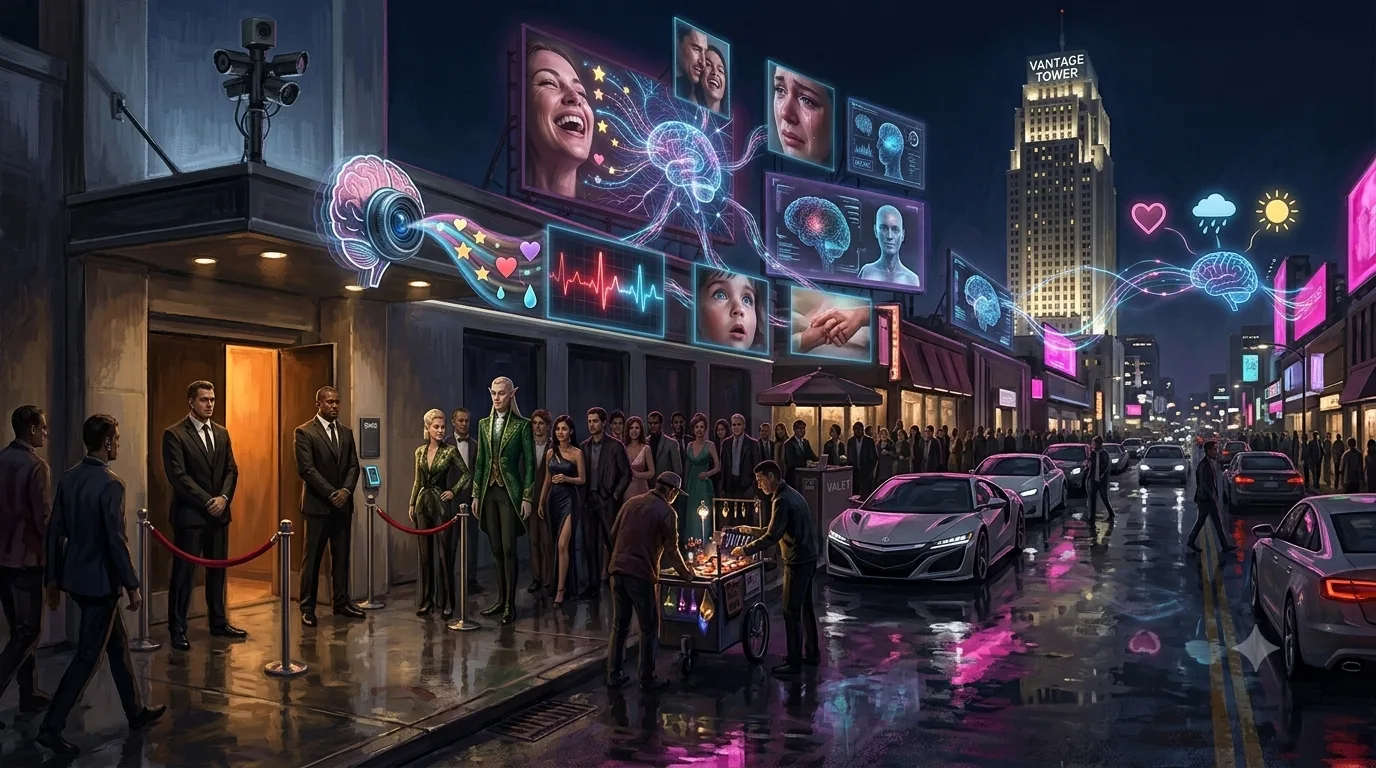
Hollywood is the trade rather than a place: the studios, the rigs, the deals, the people who make simsense and trideo and have called it "the industry" since before anyone's grandparents were born. What you're standing on is where that trade shows its face: a boulevard-and-hills district that carries the name because the trade was born here, and a mile and a half of Sunset Boulevard where it still comes to be seen. The work itself moved out decades ago; see Studio City and Burbank for where the lots actually are now.
The two halves used to be two pages, and the boundary between them was real: West Hollywood governs itself, has a council, a rent ordinance, a fireable security contract, and none of that describes the Strip. What changed is who the Strip answers to. It sits inside WeHo's incorporated limits and always has, but the corridor and the wider boulevard-and-hills district around it run on the industry's money and the industry's rules, on a decades-old trade WeHo's own council made on purpose: keep the nightlife on Sunset, leave the rent-controlled streets alone. See West Hollywood for how and why.
Wealth is a function of elevation up in the hills (Beachwood, Whitley Heights, the streets off Mulholland, Los Feliz on its slope) and on the money side of the Strip's doormen. Everywhere else, on Hollywood Boulevard, Western, Vine, Sunset east of Highland, it's another city entirely: residential hotels renting by the week to people with no SIN, storefront clinics, storefront churches, storefront chip shops, Thai Town and East Hollywood dense and poor and functioning, full of the people who work in the industry's basement rather than its front office. The line between the two is about four blocks wide, and everyone who lives here knows exactly where it runs.
The Strip itself, Doheny to Crescent Heights, doesn't belong to either half. It is hotels, towers, membership clubs, and security that belongs to the venues rather than to anybody with a badge. This street has been selling an idea of Los Angeles to people from somewhere else since the 1930s, and that turned out to be disaster-proof: the money arrives from outside, so what happened to the coast never touched it.
Published Shadowrun folds West Hollywood into this same district and describes its security as "extremely tight but at the same time unobtrusive", which is the Strip's whole design philosophy in one clause, and it is why the venues rather than the city hold this street.
What the crew knows#
- Every door on the Strip is a private jurisdiction. No permit, no district authority, no appeal. The venue decides who comes in, what they may carry, and what happens in the back room. West Hollywood's officers don't go inside unless a venue asks, and venues almost never ask.
- The rooms, and what each is for: the Whisky and the Roxy take volume and check weapons at the door. The Troubadour, just south and technically off the Strip, is where anybody who matters actually goes. The Chateau Marmont and the Sunset Tower are for people who'd rather not be seen paying, which makes them the two most useful buildings on the street.
- Weapons are checked, not banned, and the check is a cloakroom rather than a scanner. What you hand over comes back. What you didn't hand over is your problem if it turns up.
- You can walk from a gated hillside street to a boulevard where nobody will help you in under ten minutes. The four-block line between them is posted nowhere and every local can draw it.
- Chips are everywhere on the boulevards. The good stuff comes out of the lots in Studio City and Burbank through somebody's cousin; the bad stuff is cooked locally, in back rooms on this side of the hills, and takes people apart.
- Residential hotels are the best place in Los Angeles to not exist for a month, and the worst place to leave anything you need.
- Hill people call patrol. Boulevard people don't, because there's nobody to call and never has been.
- Simsense sells openly and legally on the Strip, at prices that pay for the lighting, and it's recorded there constantly, by venues that own the take.
- You're on camera from the moment you turn onto Sunset, and that footage belongs to whoever owns the frontage rather than to anybody you could subpoena. Which cuts both ways.
Getting in#
Nothing gates the boulevards or the flats. The hills are private roads, gate codes, and patrol cars that will follow a vehicle they don't recognize for as long as it takes.
On the Strip, the doors are the border. Walk on or drive on, Sunset runs straight through and the sidewalk is public, but admission past a doorman is discretionary and dress-coded, guest lists are real, and a refusal leaves no record you can contest: the same shape of problem as Fun City's gate, at the scale of one building. A crew that looks like a crew gets turned away from the good rooms and welcomed by the bad ones.
Parking on the Strip is valet, so somebody else has your vehicle and its keys for the evening. Plan around that or park south and walk up.
Canon reference: Hollywood