Run 02: Below the Bluff
One document, in a warded house, on a coast nobody may enter, wanted before a date that cannot move.

On this page (8 sections)
Mr. Johnson's Pitch#
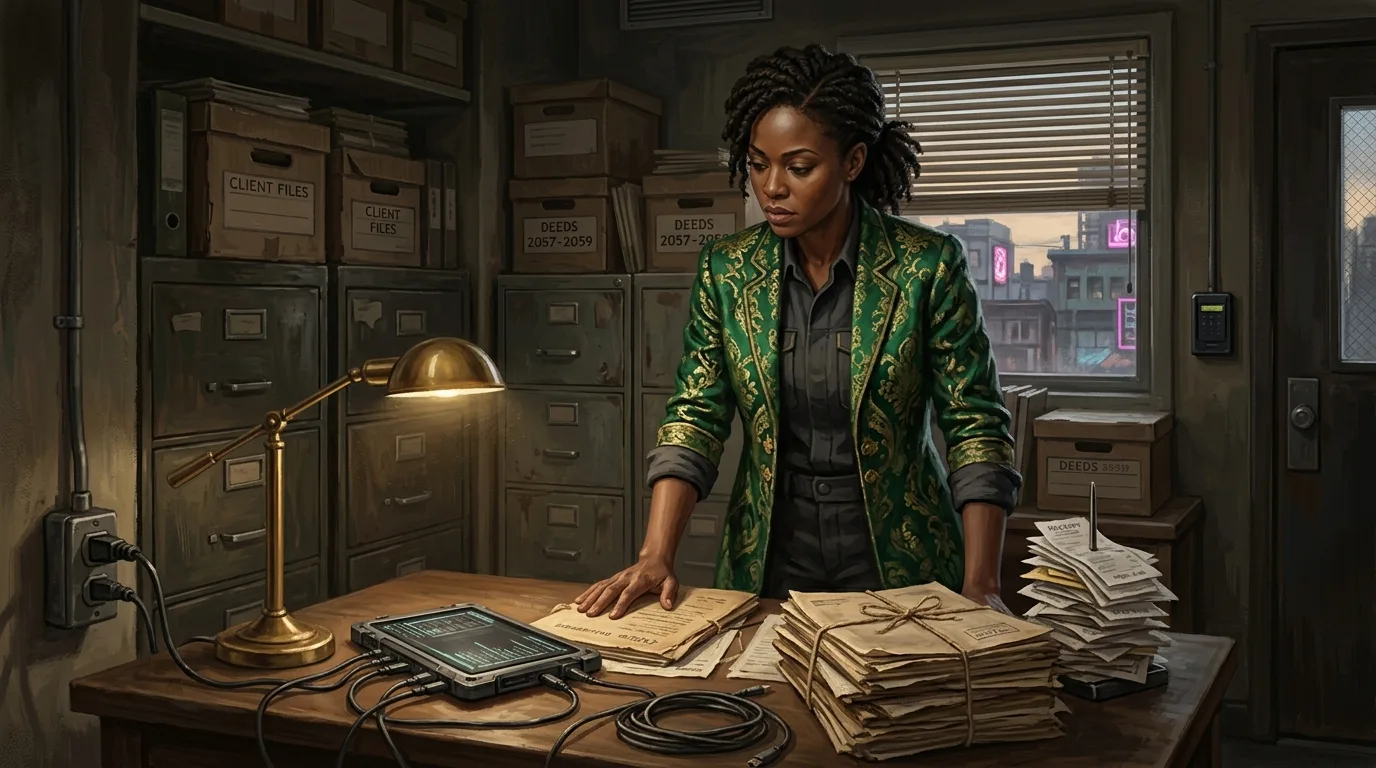
Who and where. Delphine Ward, in a borrowed community room at Virginia Avenue Park on Pico: folding chairs, a coffee urn, and eleven boxes of paper she brought herself. Fontaine introduces her in person, which she has never done for a client before, and then leaves.
What she asks for. One document, out of one house inside the cordon, in her hands before the hearing date, in the condition it was filed in. She is not vague and she does not pitch. She walks the crew through the date, what the board will decide, what happens to three hundred families in each direction, and why the date cannot move, and she has the trust's vesting clause with her, flagged, though she will not say where the ring is and should not be asked.
What she offers, and she leads with the bad news because she'd rather they hear it from her: 7,500¥, 2,500 each, which is a whip-round across three hundred households and everything they have. Plus a quarter of her contingency fee assigned to them, which is worth nothing today and possibly nothing ever. Plus her signature on anything she can honestly sign, and the crew's names on Association paperwork, the difference between people with standing and intruders with a box.
What's negotiable. Almost nothing on money. What is: paperwork, introductions, and any question about the case answered honestly, including the ones where the answer is that the case is thin.
What it pays#
Ward pays 7,500¥ (2,500 each), plus an assignment of a quarter of her contingency fee: 8.3% of a recovery that requires the hearing to succeed and somebody to eventually pay. The somebody is whoever needs this coast's title clean, and the recovery is whatever quieting the claim costs them: settlement money, housing, corporate paper, in whatever form the deal arrives. The crew's slice is filed with the board, under their own names.
Pike offers 52,500¥ (17,500 each) for the instrument to arrive after the date, in cash, immediately, with no obligation afterwards, and he'll offer to buy the crew's fee assignment separately, which takes their stake in the hearing off the table and puts the names Ward filed for them on his paper instead.
Complications so far#
- Pike came back himself, and not for the paper. He did his own asking, as ever: 17,500 a head for the quarter of Ward's contingency with our names on it, no deadline attached. We didn't sell to him. He has not said anything about that yet, which is its own kind of answer.
- We sold the fee assignment to Sowell instead, and got more for it than the run paid. He opened at 22,500 and went to 30,000 when we pushed, once. Ten thousand each, in cash, for a thing we owned and could not spend.
- The Association said thank you, and meant it. Ward put the word round the board that we recovered the instrument, and what came back was not money: it was people who now take our calls. Worth about as much as the sale, and the kind of thing that does not appear on any register.
Scene 1: The house#
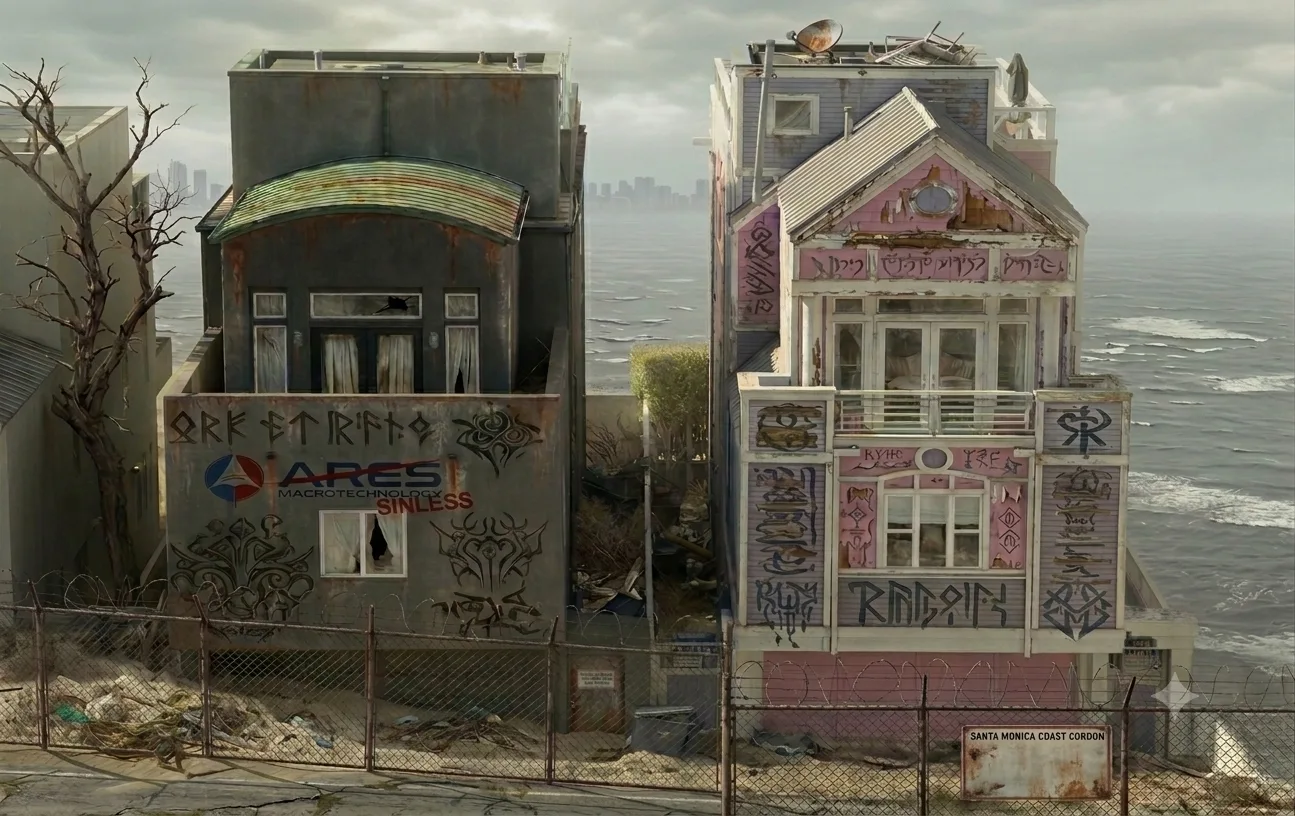
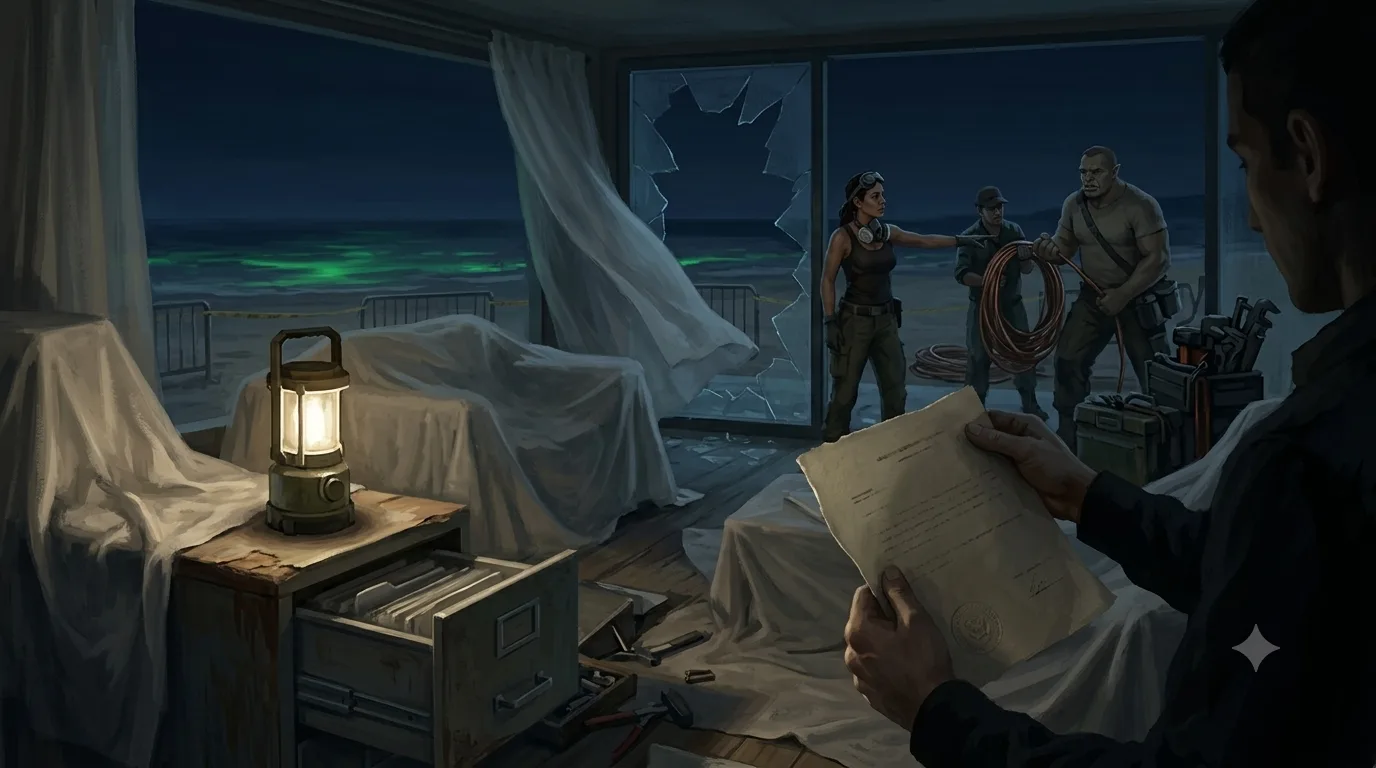
Main Challenges: getting through the bluff, a dying ward across the study door, a salvage crew already inside who got there first and are not leaving, and the wind, which turns and gives the run a clock nobody planned. Comms stop here: there is no public coverage worth the name inside the cordon. Salvage crews use radio and shout. Assume the crew is out of contact with anybody not in line of sight.
Already in the house: Last Call and her salvage crew, two trucks and four people who got here first and are not leaving. They know the cordon better than any map and they are not the enemy.
The study sat behind a ward drawn into the floor thirty years ago and failing: crossing it costs nothing, and feels, briefly and inexplicably, like being watched. In its filing cabinet, among a dissolved law practice's private keeping, was the thing Ward sent them for: the trust instrument, heavy rag paper, wet-ink signatures gone rusty brown, and at its foot a dark red wax seal cut deep by a signet. Brittle, and the one part that cannot arrive cracked.
Scene 3: Bringing the chair in#
Main Challenges: an escort, and the ambush that was waiting on it. The border crossing was the easy half; the hard half was ten miles of city between Union Station and 1685 Main.
The instrument was safe the moment Ward had it, lodged with the board the same evening. What the hearing still needed was not in the city: the vesting clause runs through Verna Reece, the chair, the senior living descendant, and the hand the ring had to be in when it met the wax, a year out of reach on Pueblo Council ground. So the last beat was a homecoming: meet her coming off the rail, walk her through the border hall at Union Station, and get her to 1685 Main for the hearing. The crossing itself went by in twenty minutes, and the border officer never became more than a pressed uniform and a stamp. The miles in between were another matter, and the guns waiting on the emptiest stretch of them did not get what they were paid for.
Payout#
15,000¥ (5,000 each): the 7,500 Ward pitched for the document, and the same again for the escort, agreed when she asked for the homecoming. And the fee assignment: a quarter of Ward's contingency, filed with the board, in our names. The first time any of us has appeared in a continuous register under our own name, and a thing we owned and could not spend.
Then we spent it. Sowell bought the assignment for 30,000¥, 10,000 each, after opening at 22,500 and moving once. He called the second number his best and final and did not explain it, and he was telling the truth about both.
And the part with no number on it: the Association's thanks, worth about 10,000 a head in introductions. Ward told the board who recovered the instrument, and the board is three hundred households deep. What we have now is people on the Westside who pick up.
Aftermath#
- The claims are entered. Ring met wax in front of the board, the finding is supported, and the slate went onto the register behind the anchor claim. Nobody got a house back, and Ward never said anybody would: what the Association owns now is a dated, witnessed, provable defect in the title assembly Pike has been buying, and it gets more expensive for his client every day it stands.
- Reece went home. Not to the niece's kitchen: winning means she gets to stop hiding.
- The hearing is over and the negotiation has not begun. Whatever quieting the claim eventually costs somebody, 8.3% of it is filed under our names, and one standing offer says somebody would rather we did not keep it.
People#
Delphine Ward
Contingency lawyer for the Belmar claimants, and one of them herself. A client, not a Johnson.

Trent Pike
Title-assembly attorney, Century City. Buying the coast for somebody he won't name.
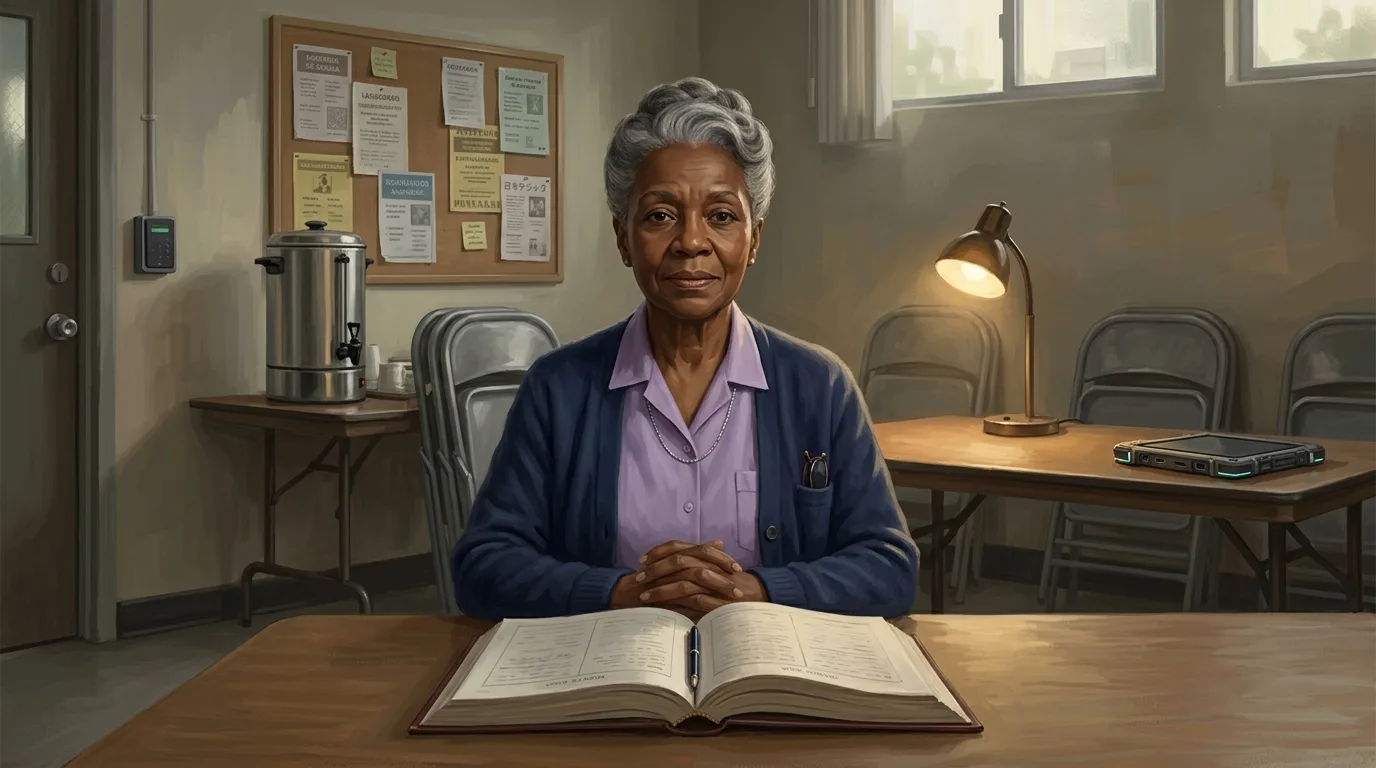
Verna Reece
Chairs the Belmar Association. Senior living Hollingsworth descendant, and back in the city since the hearing.
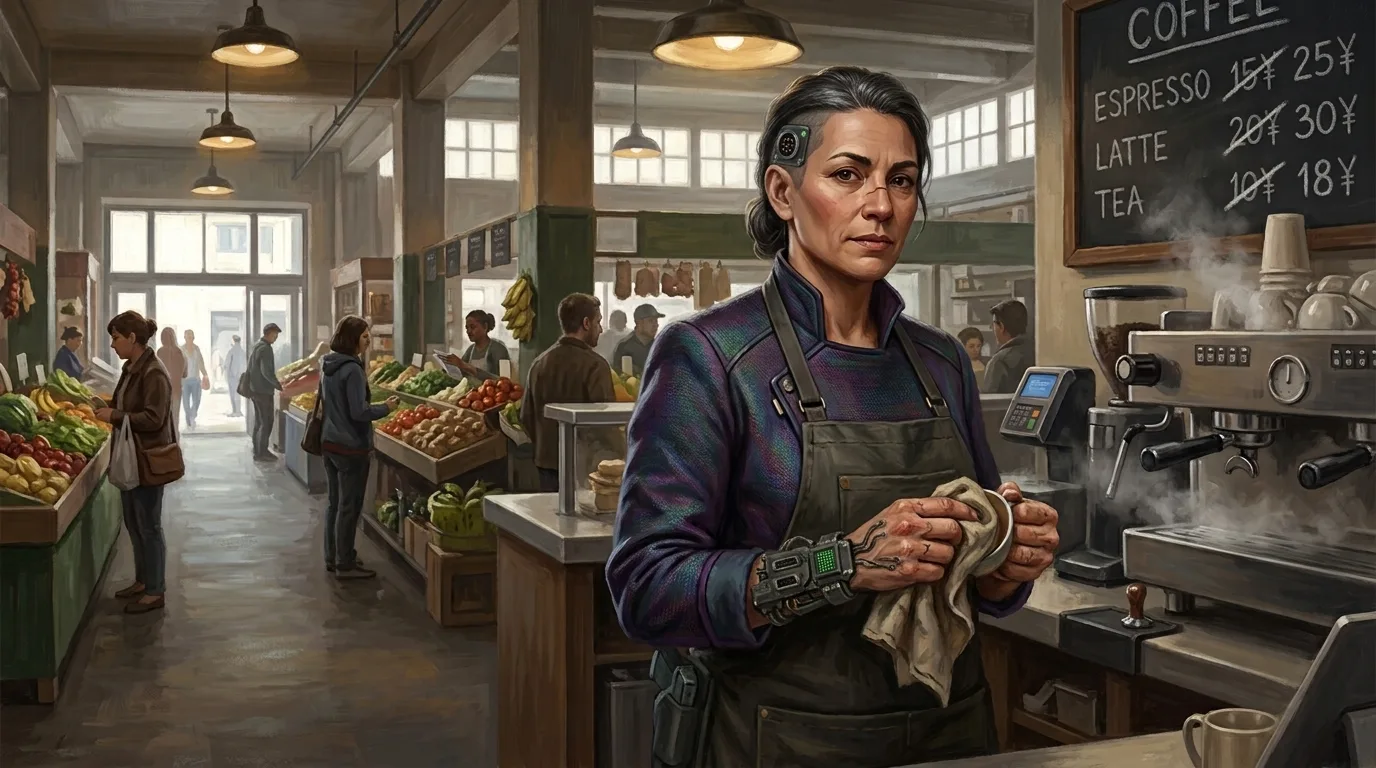
Fontaine
The crew's fixer, and has been for years. Takes ten per cent and earns it.
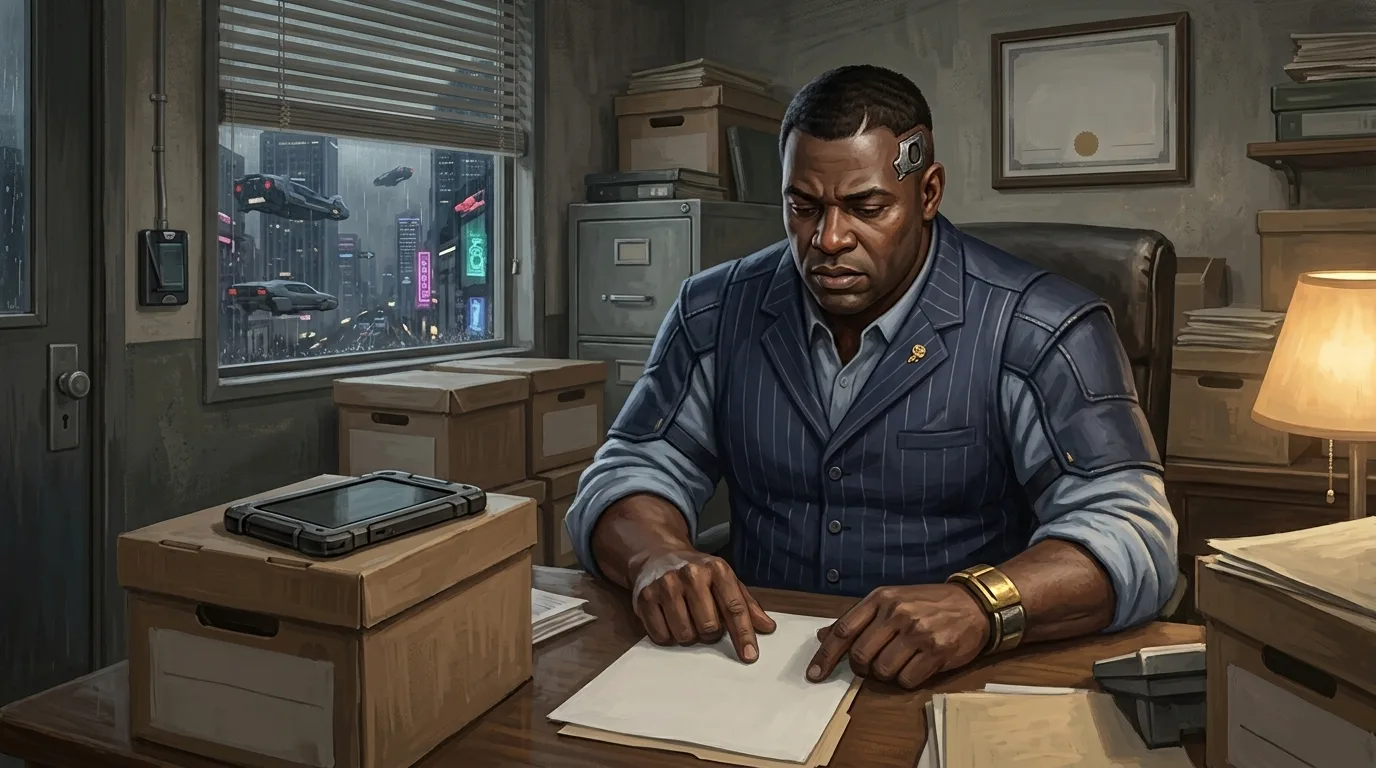
Abram Sowell
Buys filed paper at twenty cents on the nuyen and waits for 2071. Has never broken a contract.

Last Call
Two trucks and four people, working the cordon. Got there first, isn't leaving, isn't the enemy.