Santa Monica
Eight square miles that still governs itself, looking down at an ocean it can't use.
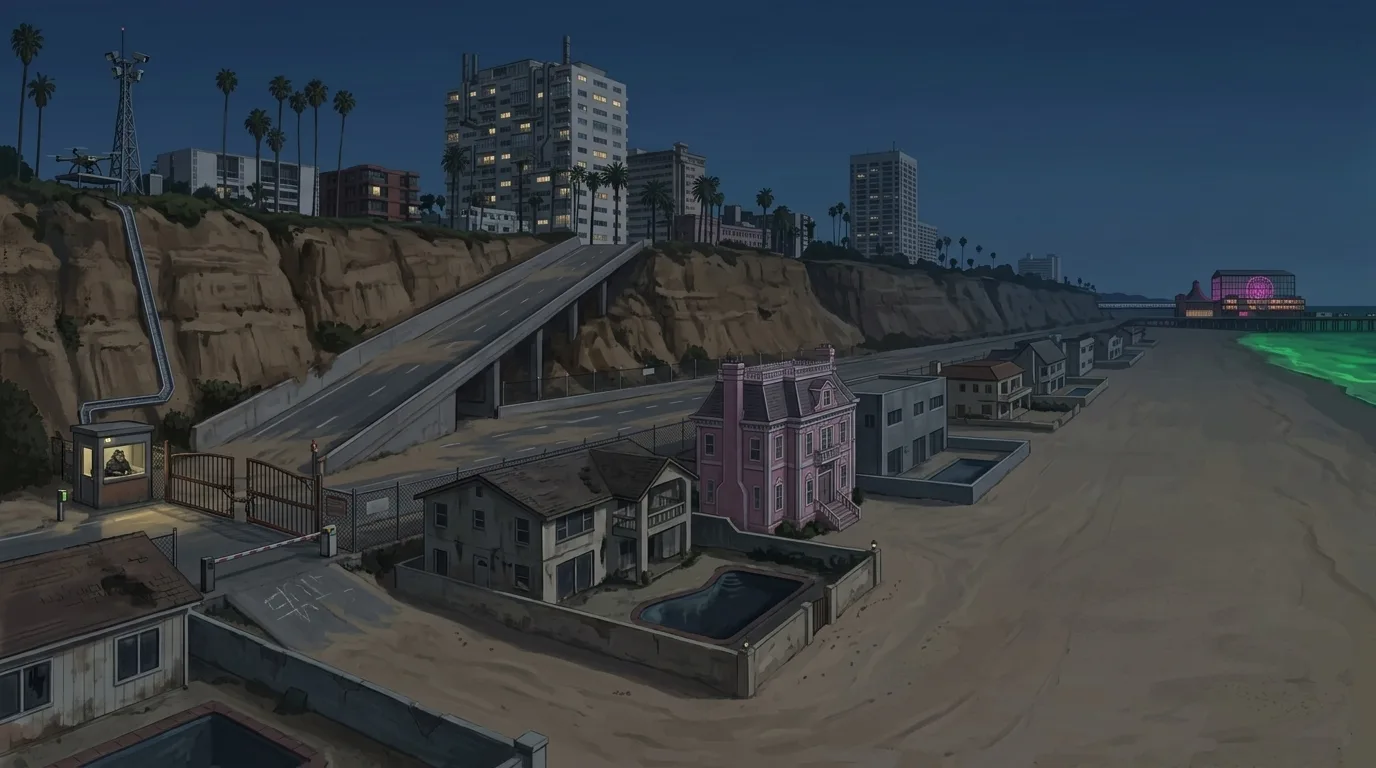
The bluffs saved it. When the wave came in in 2058, everything at sea level went, and Santa Monica's expensive half sits sixty feet above the beach looking down at its own dead water. So the city is still standing, still full, still expensive, and still has a view it can no longer swim in.
North of Montana is old money in houses that have been in the same families since before the plague: lawns, hedges, private patrol response measured in seconds. Ocean Avenue is towers with the best and most useless view in North America. The Promenade still trades under new awnings for tenants your parents wouldn't recognize. Wilshire and Santa Monica Boulevard are offices, clinics and the businesses that serve people who live here and work elsewhere.
Inland it's a different and larger city. The Pico neighborhood and Santa Monica's own mid-city are dense, working, and functioning: small apartment buildings, the college, the markets, the churches, the trades. That's where most of Santa Monica actually lives. It came through the last thirty years better than the coast did, because it was never built on the assumption that an insurance policy would arrive.
The bluff is the wall: sixty feet of crumbling sandstone from the Palisades down to the coast highway, and the city only ever cut a handful of ways through it. Close those and the whole shoreline is sealed without a fence: the California Incline down from Ocean at California, the Moomat Ahiko ramp just north of the pier, the pedestrian underpasses beneath the highway, the Palisades Park stairs, and the pier bridge at Colorado. Six cuts in two and a half miles, all of them gated since 2056, none of them hard to find.
On the seaward side of the highway, north of the pier, is the old Gold Coast: the beach houses that sat directly on the sand, walls of glass facing the water, some of them a century old and famous. Those are the flats. They were evacuated in a week and they are still standing, still furnished, and still worth what nobody can now pay. The Annenberg beach house at 415 is the landmark you navigate by.
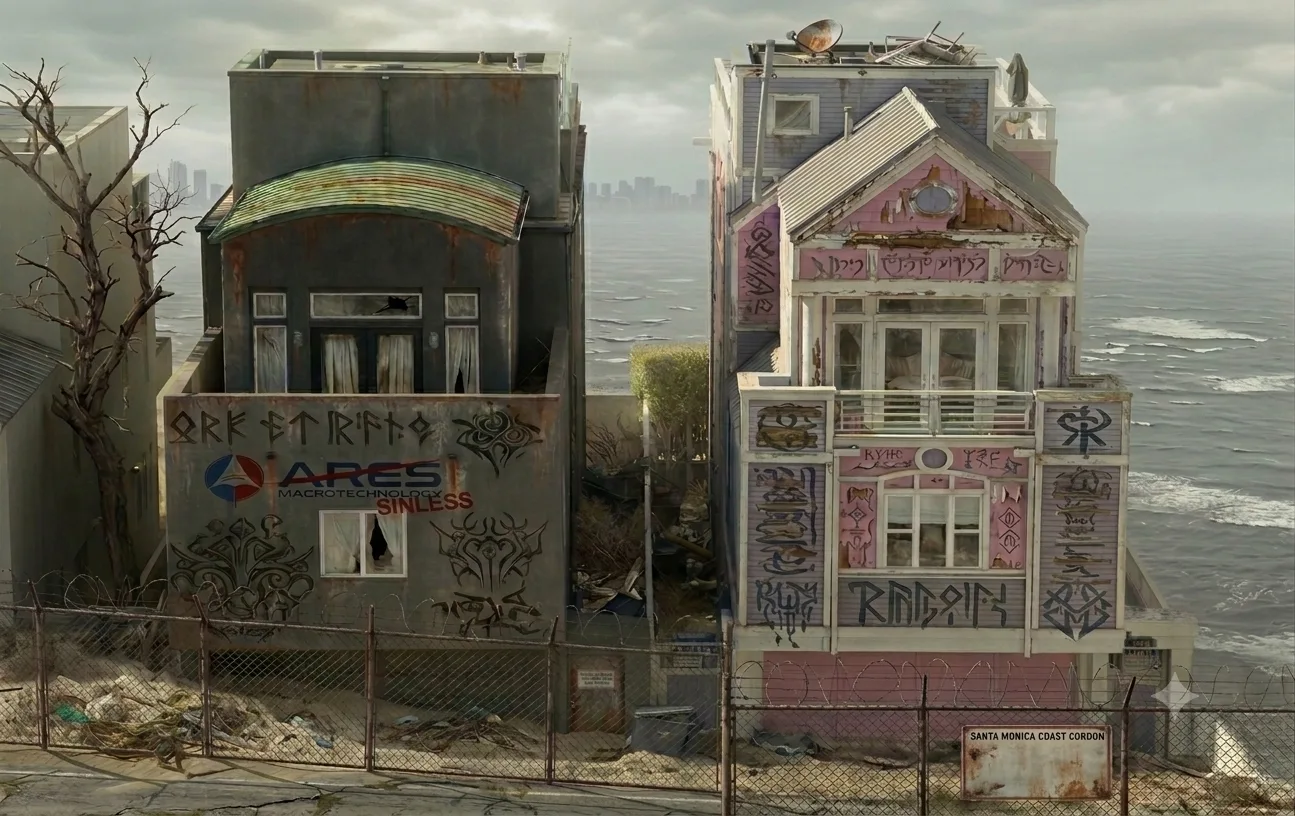
Halfway along the strip there's a facing pair everyone gives directions by: one tall and pink and fussy with a century of mouldings, the other flat gray and featureless, shoulder to shoulder behind the same length of cordon fence. Locals call them the Barbenheimers. Nobody remembers why, and the people who would have known are dead.
Santa Monica Place, the old mall at Broadway and Second, was sealed and filtered in the 2040s because a shopping center already had the plant to do it. It is now the district's indoor high street and the place everybody parks, and a glazed pedestrian tube runs from it down Colorado and out onto the pier's second level so that nobody has to be in the air.
The pier is the seam, and it has its own page, because it stopped being a pier some time in the 2040s and became half a mile of ungovernable ground with a view. Its deck starts up at Colorado and runs out over water that is closed, so it straddles a cordon, and a gated stair partway along it is the way down onto sand nobody is allowed to be on. Everybody knows that, so it's the most-watched structure in the district and still the way most people get down there.
What the crew knows#
- This district governs itself, and that's rare enough to plan around. Tenant law here goes back to the twentieth century and never lapsed, so when the city government evaporated in 2057 the Rent Control Board, the neighborhood councils and the elections office were all still running and simply carried on. They hire the patrol contract. They can fire it. They hold meetings about it, and the meetings are minuted.
- Consequences here are procedural. A job that goes loud produces a hearing, a contract review and a name in a public record, which is slower than being shot at and lasts much longer.
- Santa Monica College, 1900 Pico, is the practical school for this half of the city: trades, medtech, rigging, and thaumaturgy for people who'll never see a university. Half the useful technicians on the Westside came through it and most still know somebody there.
- RAND, 1776 Main Street, two blocks off the water by the Civic Center. It has been selling analysis to armies since 1948 and never stopped; these days it sells to anyone who can pay, including every side of the same fight. Runners use it the way you'd use a library, if the library invoiced and asked what you wanted it for.
- The pier is the district's one going concern that isn't rent, and it is not empty. Angelenos come to look at water they aren't allowed to touch, corporate staff on rotation get shown it on the company's money, and Pueblo day-permit visitors outspend both. What sells out there, and on which of its levels, is on its own page.
- Anything below the bluff line is another country. The fence isn't decorative and the air on a west wind is a real problem.
- The airport is the fight this district lost. Fifty years of it, a signed agreement, a closure dated to the end of 2028, and then the quake took LAX, the closure was suspended as an emergency measure, and the emergency has been in effect for thirty-two years. Residents will still tell you the date. See the airfield, which is a separate world with its own rules.
- The Rent Control Board holds the only property records west of downtown with an unbroken chain of custody, and not for lack of digitizing: there are five or six Matrix copies of the coast's title map and they contradict each other, because every one of them was re-keyed by somebody after the Crash from whatever they could find. What the board has is the originals: recorded instruments, wet signatures, notary seals, in sequence, with a custody log going back past 2044 because the board never stopped operating and never put the vault online. That's what survives a challenge. In a city with no county recorder, it decides who owns the coast.
What "unlicensed" actually means here#
Los Angeles has no authority that can license anything, so nothing in this city is illegal and nothing is permitted either. What that produced in this district is the pier, which is where the trade went once there was nobody left to refuse it, and its own page itemizes what sells on which level. Two things don't happen out there, however often somebody suggests them: fights, which want floor and seating and go to the Coliseum, and boats, which go twenty-eight miles south to the beach cities.
Esther Kwon does the same unfiled medical work the pier sells and does not do it on the pier, which is most of what you need to know about her.
Getting in#
Nothing stops you walking in from Venice or down the Wilshire corridor. The friction is inside: private patrol, dense camera coverage on the commercial streets, and residents who call things in because historically that has worked for them. Look employed. Vehicles get logged on Ocean and on Montana.
Don't mistake the patrol for a nuisance. The district's contract is Knight Errant's, so the two officers on Montana are corporate-grade with a residents' mandate: drones, the camera network, minutes of response time near the bluff, and the ability to call in the parent company, which behaves like an occupying force rather than a security service.
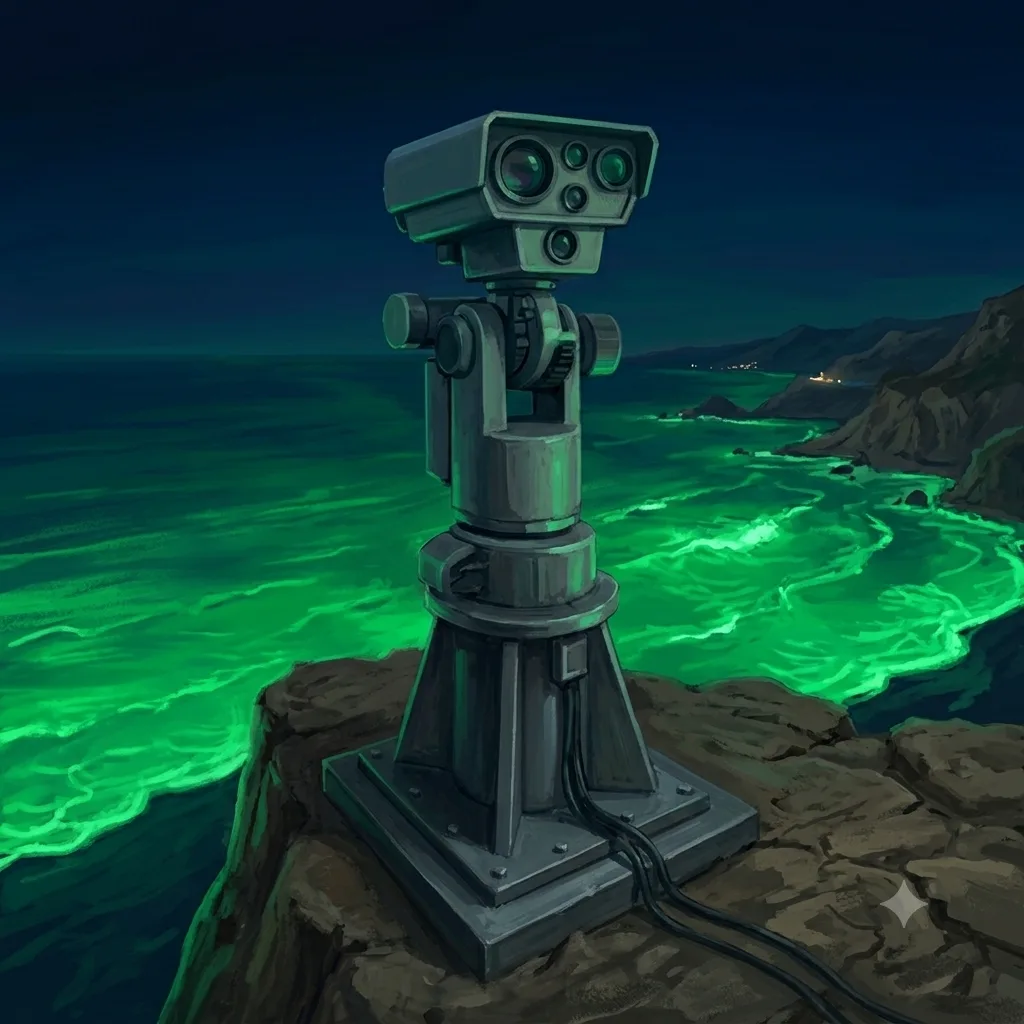
The teeth are in what follows the stop. There is no court here, so a detention has no arraignment, no clock and nothing to be produced before: they can simply keep you while they work out what you are. And they are patient: they hold the plate, the face, the footage and the incident file, there is no institution that can clear it and no limitation period on it, and they will still be looking a month later.
What actually protects the crew here is the contract itself. The patrol answers to a board that reads incident reports and can decline to renew, so it will go to considerable lengths to avoid a visible mess on Ocean Avenue, which makes publicity the lever, and makes a quiet arrest far more dangerous than a loud one.
Pico and Mid-City are open city and considerably easier to be anonymous in than anywhere north of Wilshire.